The Valley of Roses: How Moroccan Rose Water Is Distilled in Kelaat M'Gouna
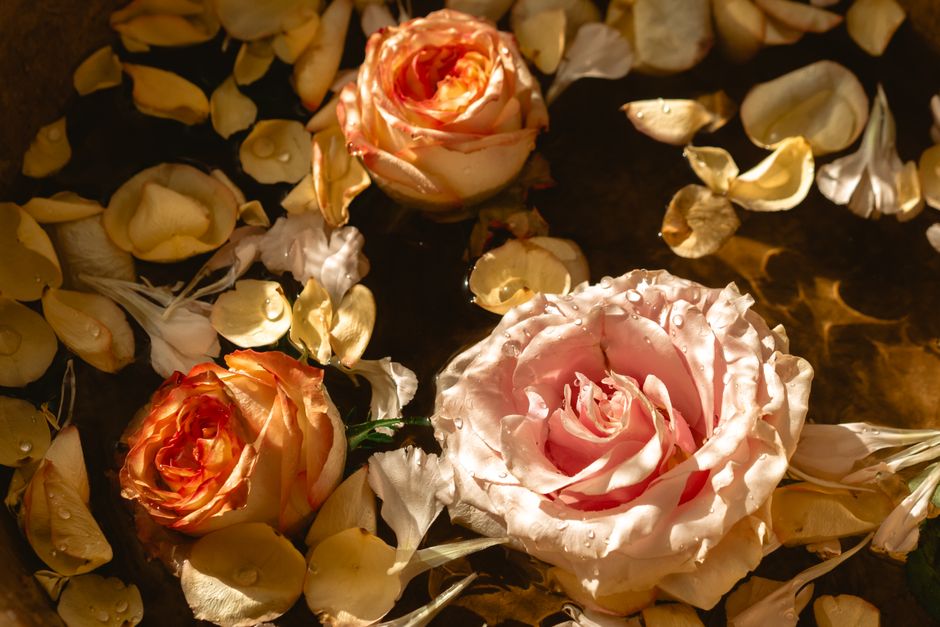
Damask roses (Rosa damascena) are the variety used to produce authentic Moroccan rose water.
Each spring, the Valley of Roses in the High Atlas Mountains bursts into bloom with Damask roses. The distillation of these petals into rose water is an art refined over centuries — and one that BioArgan brings to global beauty brands.
The Valley of Roses and the Spring Harvest
Kelaat M'Gouna, a town in the Dades Valley of the High Atlas Mountains, is the heart of Morocco's rose industry. The valley's microclimate — cool mountain nights, warm days, and irrigation from snowmelt — creates ideal conditions for Rosa damascena, the Damask rose. Each spring, typically from mid-April to mid-May, the valley fills with pink blooms and the air carries a scent that can be detected kilometres away.
The harvest is entirely manual. Roses are picked at dawn, before the sun's heat evaporates the volatile aromatic compounds. An experienced picker can gather 10 to 15 kilograms of petals per morning. The harvest is a community event — entire families, cooperatives, and seasonal workers participate, and the annual Rose Festival in Kelaat M'Gouna celebrates the crop with music, parades, and the crowning of a Rose Queen.

Steam Distillation: Ancient Technique, Modern Precision
The petals are transported to distillation facilities within hours of picking — any delay means lost aroma. The traditional method, still used by some small cooperatives, involves a copper alembic still (a kasria in Moroccan Arabic). Petals are placed in the still with water and heated over a wood fire. As the water boils, steam carries the essential oils and water-soluble compounds through a condenser, where the distillate is collected.
Modern facilities like those used by BioArgan employ stainless-steel steam distillation units that offer precise temperature and pressure control. Steam is passed through the petals rather than boiling them directly, which produces a cleaner, more consistent distillate. The first distillation produces what is known as 'first-pass' rose water — the highest quality, with the most intense fragrance and the greatest concentration of water-soluble active compounds.

Quality Grades and Applications
Not all rose water is created equal. The quality depends on the ratio of petals to water, the number of distillation passes, and the storage conditions. Premium-grade rose water, like that produced by BioArgan for private label clients, is a single-pass distillate with a 1:1 petal-to-water ratio — meaning every litre of rose water is produced from approximately one kilogram of fresh petals. This yields a product with a rich, complex fragrance and a pH of approximately 4.5, ideal for cosmetic formulations.
Lower grades are produced by re-distilling the same petals multiple times or by using a higher water-to-petal ratio. These are suitable for ambient fragrancing or entry-level products but lack the active compound density of premium rose water. For brands that want to market authentic Moroccan rose water as a hero ingredient, the grade matters enormously — and BioArgan provides full documentation of petal origin, distillation date, and chemical analysis for every batch.